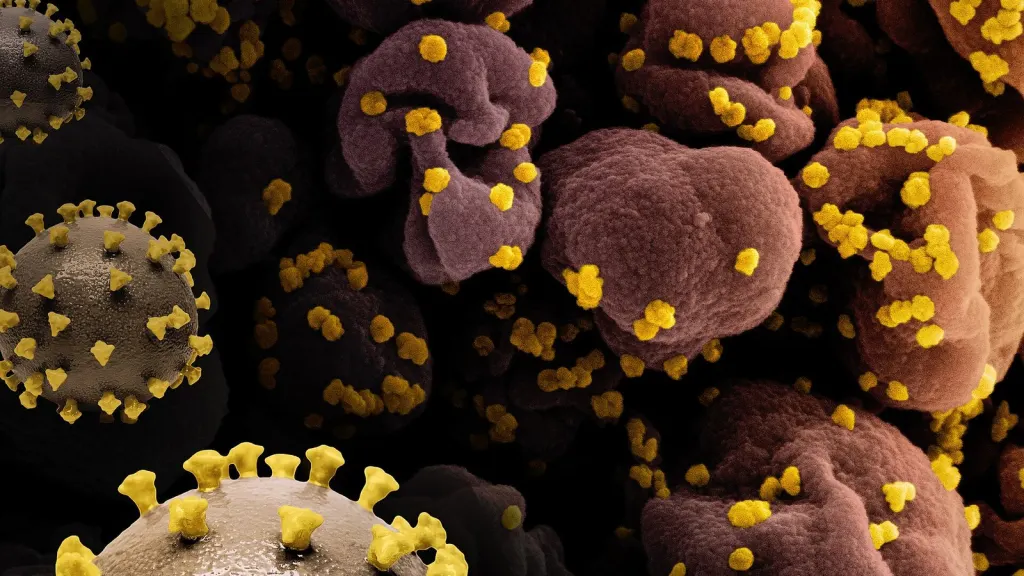

Photo: NIAID / Wikimedia Commons, CC BY 2.0
UC Berkeley researchers have shown in mice that proteins from SARS-CoV-2, the virus that causes COVID-19, can directly activate the sensory neurons that drive sneezing, coughing and pain, the university reported. The study, led by doctoral student Sonali Mali in the lab of Diana Bautista, appears in the Nov. 13 issue of the journal Neuron.
The prevailing view has been that these symptoms come from inflammatory substances released by infected cells acting on nerves. The new work points to a second route. The trigger is a viral protease called PLpro, for papain-like protease. When infected cells die, PLpro and another protease, Mpro, are released and stimulate nociceptors, sensory nerves found throughout the airways that are especially sensitive to noxious stimuli.
The university said this is the first evidence that viral proteins can directly activate sensory nerves to promote symptoms, and that it may help explain long COVID problems such as headache, shortness of breath, persistent cough, sore throat and chest pain.
The antiviral Paxlovid targets Mpro and eases some symptoms. The researchers say targeting PLpro might also help. Bautista began the project after she and members of her lab had sneezing and coughing fits early in the pandemic; she had to show reviewers along the way that mice do sneeze.